

One of the most significant drivers of change in the hospitality industry today is the incorporation of biophilic design.
In order to meet the expectations of guests both old and new, hoteliers are now beginning to adapt the principles of biophilic design into their large-scale design plans. Hotels need to be revolutionary in their approach to design, new generations of travellers with money to spend have evolving tastes, preferences and desires. In an industry that is constantly looking to set itself apart from the pack, through the integration of biophilic design the brand can create an immersive guest experience that is truly unique and memorable this will then stay with the guests long after they ‘check out’!
What is Biophilic Design?
Biophilic design extends far beyond the inclusion of plants; it embodies a strategy for fostering a multisensory connection with the world around us. Positioned at the crossroads of sustainability, wellness, and human-centred design, it signifies the art of intertwining human lives with the natural environment within constructed spaces and communities.
At its core, biophilic design strives to craft thriving habitats for people within contemporary structures. Regardless of our affinity for the term itself, the effectiveness of biophilic design is evident. Our designs seek to catalyse a shift towards the adoption of more biophilic and sustainable practices within the hospitality sector. To put it simply, greater integration of ‘nature’ is imperative in hotels. Current research shows us that a significant portion of the population resides in urban settings, spending around 90 percent of their time indoors, with minimal access to nature. This isolation has contributed to heightened mental and physical health challenges.
While biophilic design offers promise as a solution to these issues, its practical implementation remains limited and often misconstrued. Today, hotel guests are actively seeking spaces that evoke serenity, cleanliness, and restoration. Our biophilic approach to all our wonderful projects endorses the integration of nature, encouraging the hospitality industry to progress from living walls to immersive living hotels.

Introducing Biomimetic Architecture
Nature has been solving many of the problems we continue to grapple with for billions of years – animals, plants, even microbes have found what works, what’s suitable, and what endures. The words ‘bios’ (life) and ‘mimesis’ (imitate) form the foundation of ‘biomimicry’ and ‘biomimetics’. These terms represent the science and art of replicating nature’s ingenious biological concepts to address human challenges. Biophilia encompasses not only plants but also sound, temperature, ventilation, and other environmental facets.
We know that biophilia transcends foliage; it encompasses a range of furniture, sounds, temperatures, materials, and spaces that cater to guest’s diverse needs.
As designer’s who take our cue from nature, we emphasize the surge of biomimetic design and understand the importance of its potential. Nature offers a plethora of valuable lessons for designers. Nature’s adaptation to regional contexts has led to the concept of ‘practical regionalism’, signifying the design’s reflection of geography and culture.
When adopting a nature-inspired perspective, we consider:
- How would nature address green construction challenges?
- What natural solutions exist for these issues?
- What constitutes the most energy-efficient problem-solving approach?
- How does life optimize resources?
- How does life integrate elements into systems?

Throughout history, humans have drawn inspiration from nature to resolve problems. Leonardo da Vinci’s study of birds paved the way for human flight and aircraft design. Applied biomimicry offers three avenues or their combinations:
- Form – mimicking natural structures
- Processes – mimicking natural functions
- Systems – mimicking self-regulating ecosystems
Measuring Sustainability and Wellbeing
Elevating our building standards necessitates an evolution in our mindset. Sustainability’s significance within the hospitality sector has reached maturity. What was once considered a mere checklist exercise now stands as a pivotal design requirement. The environmental impact of hospitality projects has become integral to the design and specification process. Moreover, focus has shifted to the influence of buildings on guest health and wellbeing.
The Sustainable or Green design movement has gained substantial momentum, notably in the 21st century. Standards such as BREEAM, and the WELL Building Standard reflect the integration of environmental and wellbeing aspects.
Although sustainability predominantly centres on environmental considerations like energy and water efficiency, a new facet has gained prominence: the healthy building movement. This movement holistically integrates building construction and inhabitants’ welfare, intertwining sustainable initiatives with wellbeing awareness. We know that this emerging trend arises from heightened awareness of chronic illnesses, mental health concerns, and environmental consciousness. A return to a more organic approach to spaces and individuals is imperative.
Validating Affective Responses to Biophilic Design
Design wields the power to influence human behaviour positively or negatively, impacting health, wellbeing, and performance. We know that the human mind lags behind the digital era. Evolving from evolutionary psychology, we recognize the optimal sounds, vistas, and parameters for our functionality. Natural elements enhance human efficiency by harmonizing with our innate tendencies. Hotel guests predominantly spend time indoors, be it in-room or lobby spaces, rather than the rejuvenating expanse of open nature.
Nature engenders “involuntary fascination,” captivating the mind and promoting directed attention, stress reduction, and curiosity. Biophilia encompasses stress recovery, lowered blood pressure, improved cognitive function, heightened focus, reduced violence, improved moods, and accelerated learning rates. Through the integration of green design into all our projects, we believe this then fosters a community of guests committed to a healthier, more connected future.
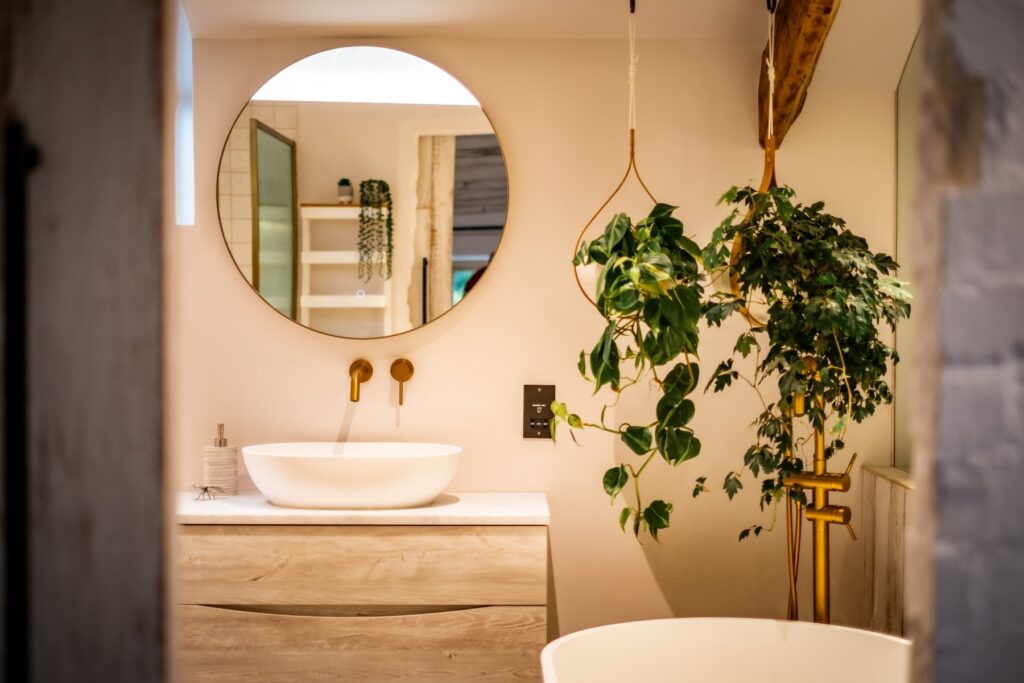
For instance, the emphasis on plant life directly enhances air quality, as plants act as natural air purifiers, converting carbon dioxide into oxygen. Biophilic design materials like wood or bamboo can also improve air quality by reducing chemical emissions.
Emergence of Technobiophilia: Reimagining Nature
Various biophilic elements can enhance hotel spaces, adapting to diverse environments. While digital alternatives like virtual park tours or digitally adorned guest rooms can’t replace the benefits of true outdoor experiences, they offer distinct advantages when venturing outside isn’t feasible. Our relationship with nature is evolving thanks to technological integration.
“Technobiophilia” taps into our intrinsic “biophilia,” invoking positive feelings. Nature images in hospitals have alleviated pain among patients, underscoring nature’s therapeutic effect through screen and pictures. Healthcare research has demonstrated that indoor access to technological nature and organic design elements yields less stress, elevated mood, and enhanced cognitive function to which we adopt the principles of Salutogenic Design.
Our ethos highlights that biophilic design spans beyond isolated moments; a broader perspective we believe is essential.
Biophilic Design, the path forward?
The landscape of travel and hotel design is undergoing a profound transformation. What if the experience of traversing a hotel mirrored the physical, psychological, and emotional rewards of walking through a forest? What if redesigning the hospitality space could harmonize structures with the natural world, reviving our relationship with nature?

Hotel design is multifaceted and vibrant, much like nature itself. Biophilic design empowers people with spaces that nurture exploration, adaptation, and creativity. These benefits foster connections, collaboration, and trust, reinvigorating the industry.
Our Studio place’s great importance on creative and sustainable design. Our schemes incorporate local and cultural design elements, the focus on creating holistic spaces, where each detail carefully considers the senses to provide both balance and harmony.
From urban metropolises, spa’s to exotic resorts and private clubs, our designs are innovative, sustainable and unique. Every design in our portfolio is distinctive and special, imbued with individual personality. We work on the premise that guests are increasingly looking for an exceptional experience and not just a great product.
We welcome the opportunity to explore how you can benefit from Charlotte Findlater Design to enhance or launch your project.
Category: Architecture & Build, Luxury Interior Design