The river resin bespoke commission design brief
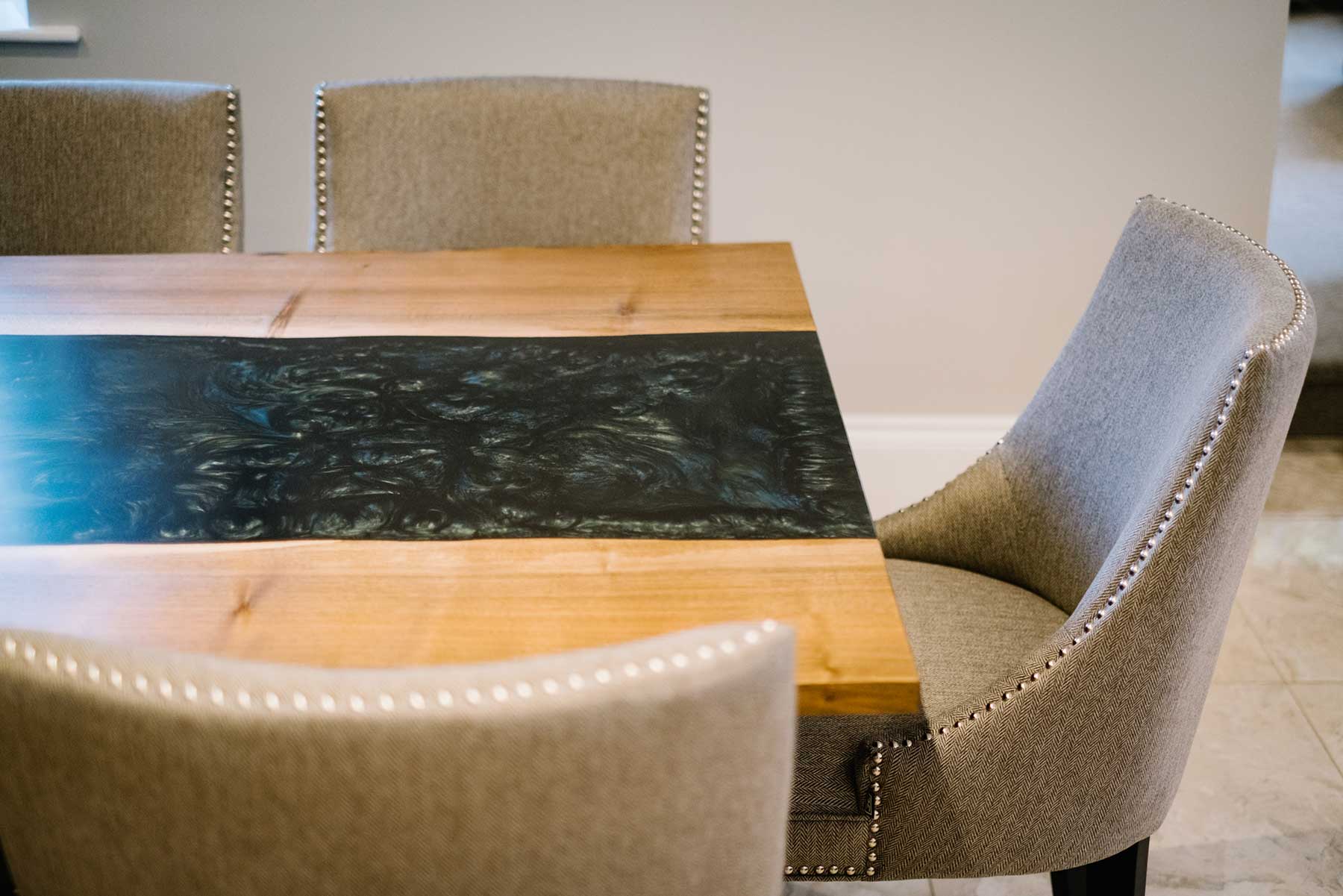
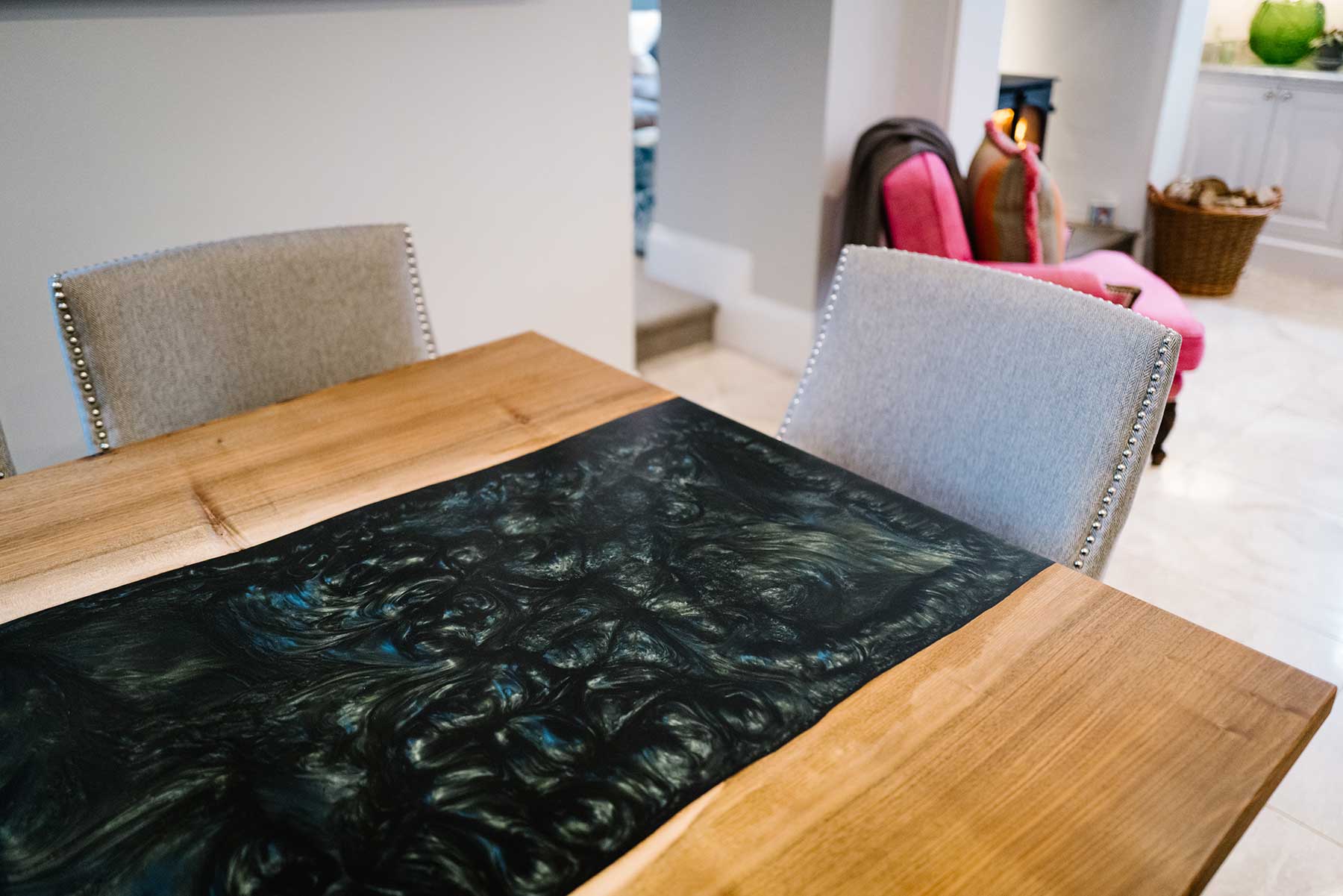
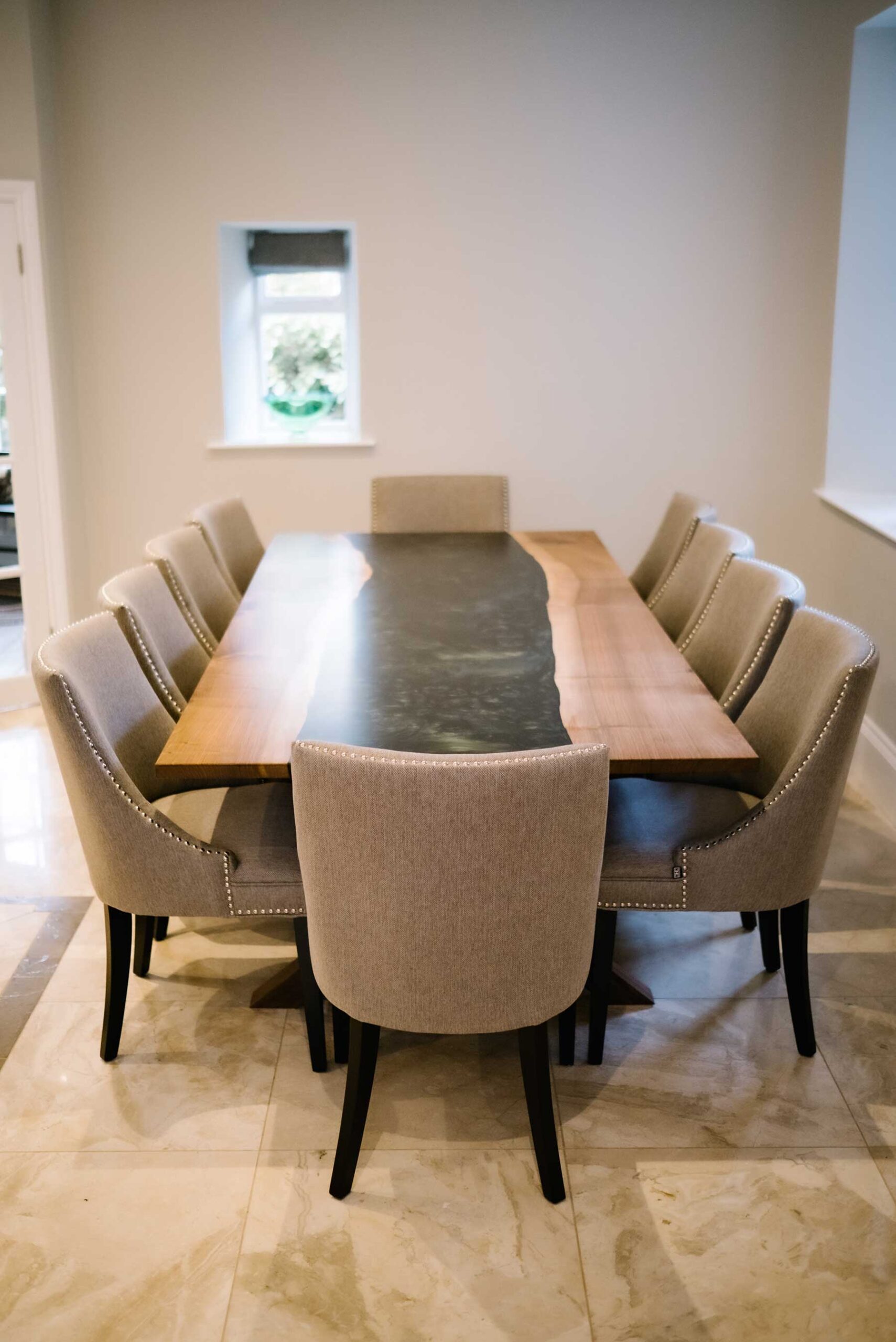
To create a stunning river resin table to seat ten; a signature element and talking point in a large kitchen diner scheme.
Craftsmanship in bespoke commissions
- Attention to the little details, using artisans to create something unique and, at times, extraordinary
- Appreciation of a one-off object’s functionality, durability and beauty
- Showcasing of unique skills and the maker’s commitment to their craft
- Preservation of traditional techniques and an understanding of tools and materials
- Careful use of resources leading to sustainable pieces, which we cherish for years to come.
The bespoke commission project in detail
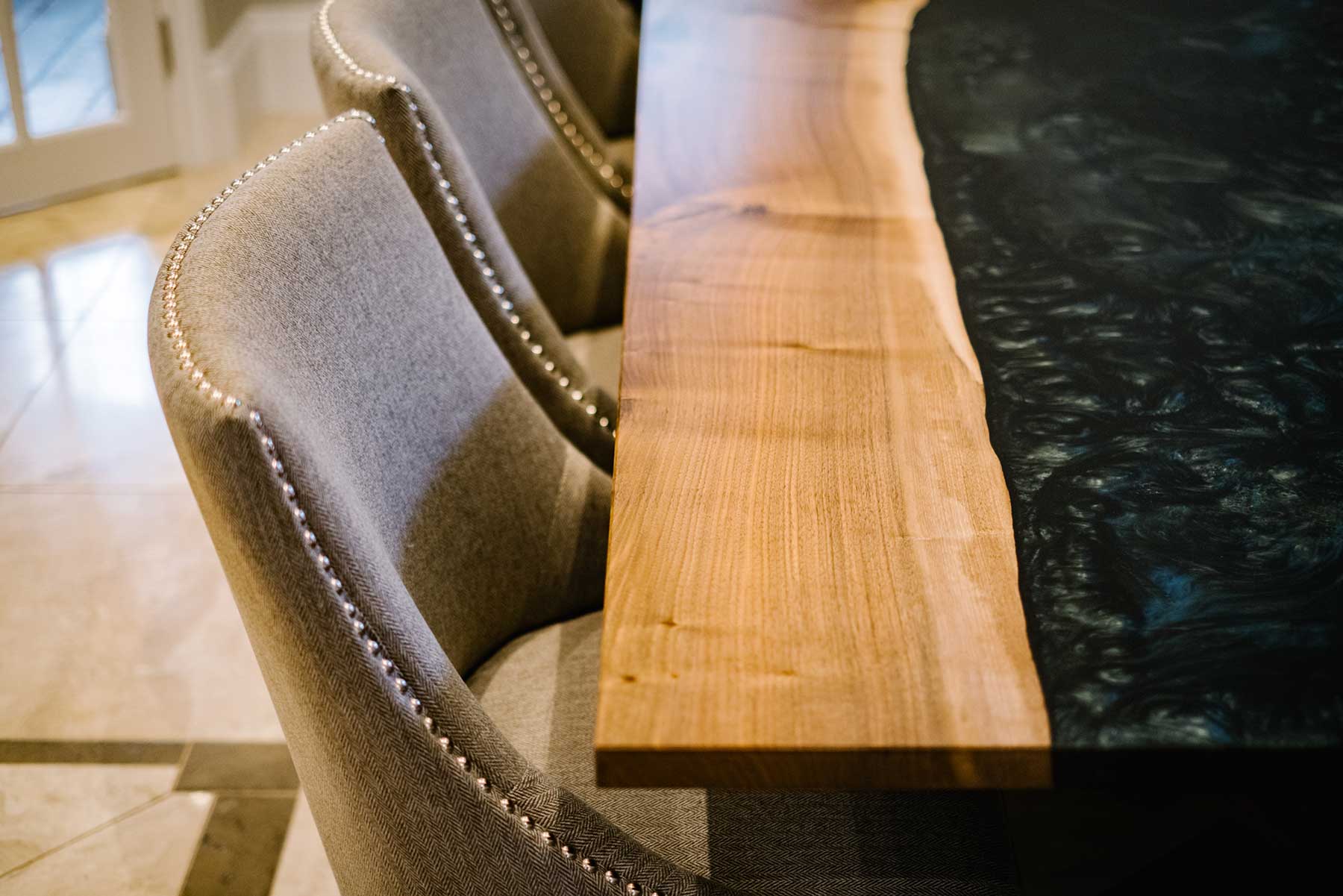
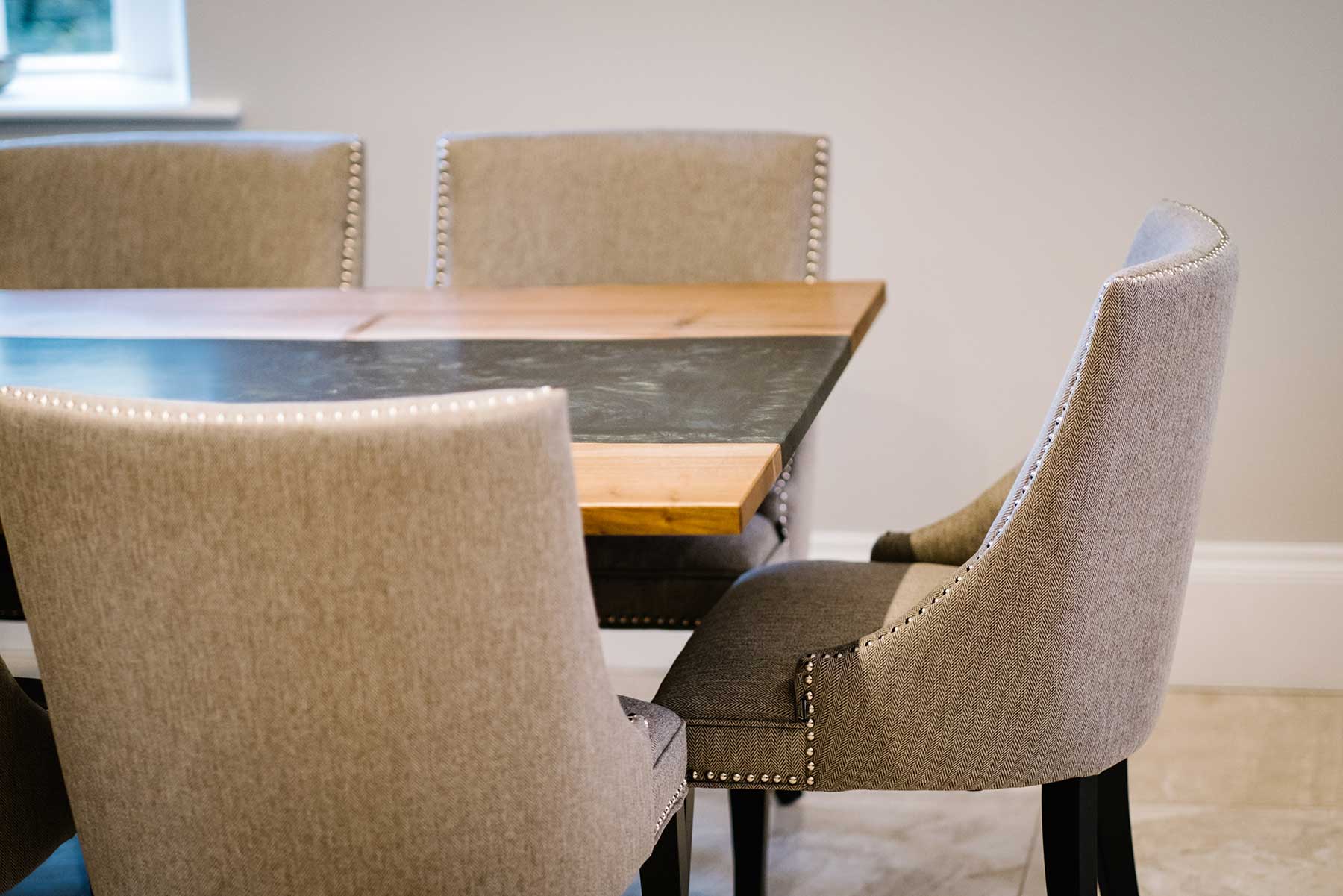
Inspired by rivers, lakes, and mountains, our river resin dining table was the perfect way to bring nature into the heart of our client’s home in the most stunning way. Its hand-selected, live-edge wood slab mimics the sweeping meanders of rivers, mountains and the rocky coastlines which make up some of the earth’s most outstanding landscapes.
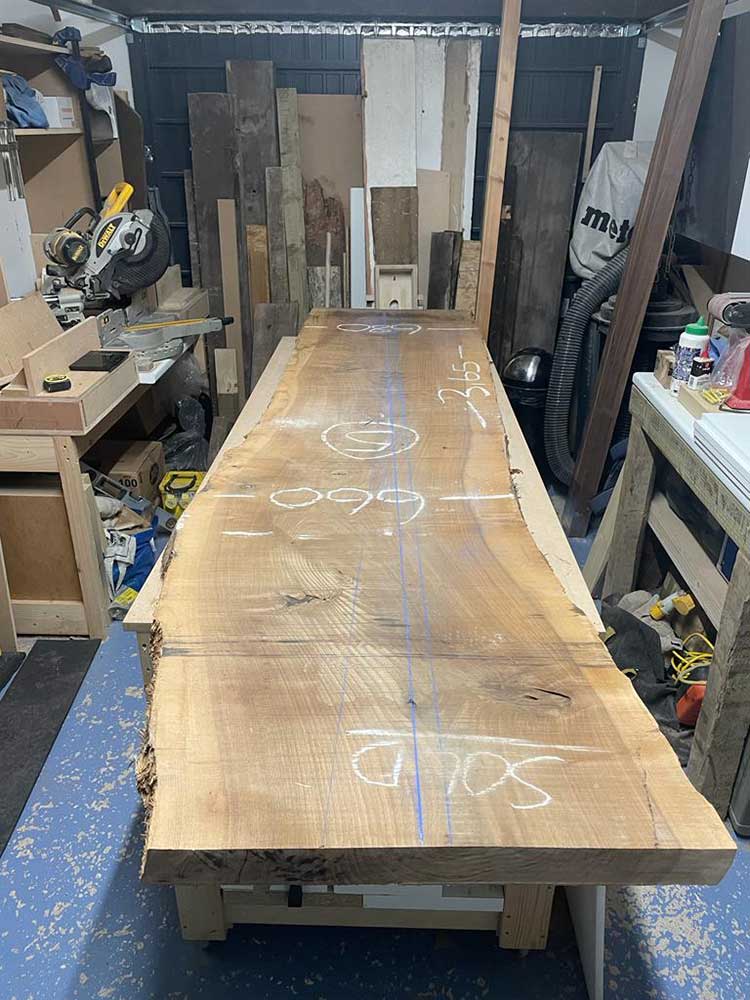
As with all of our artisan crafted pieces, we elevated it by seeking a piece of wood with a live edge that fired our imaginations and could be thoughtfully composed rather than forced to work.
Craftsmanship in action
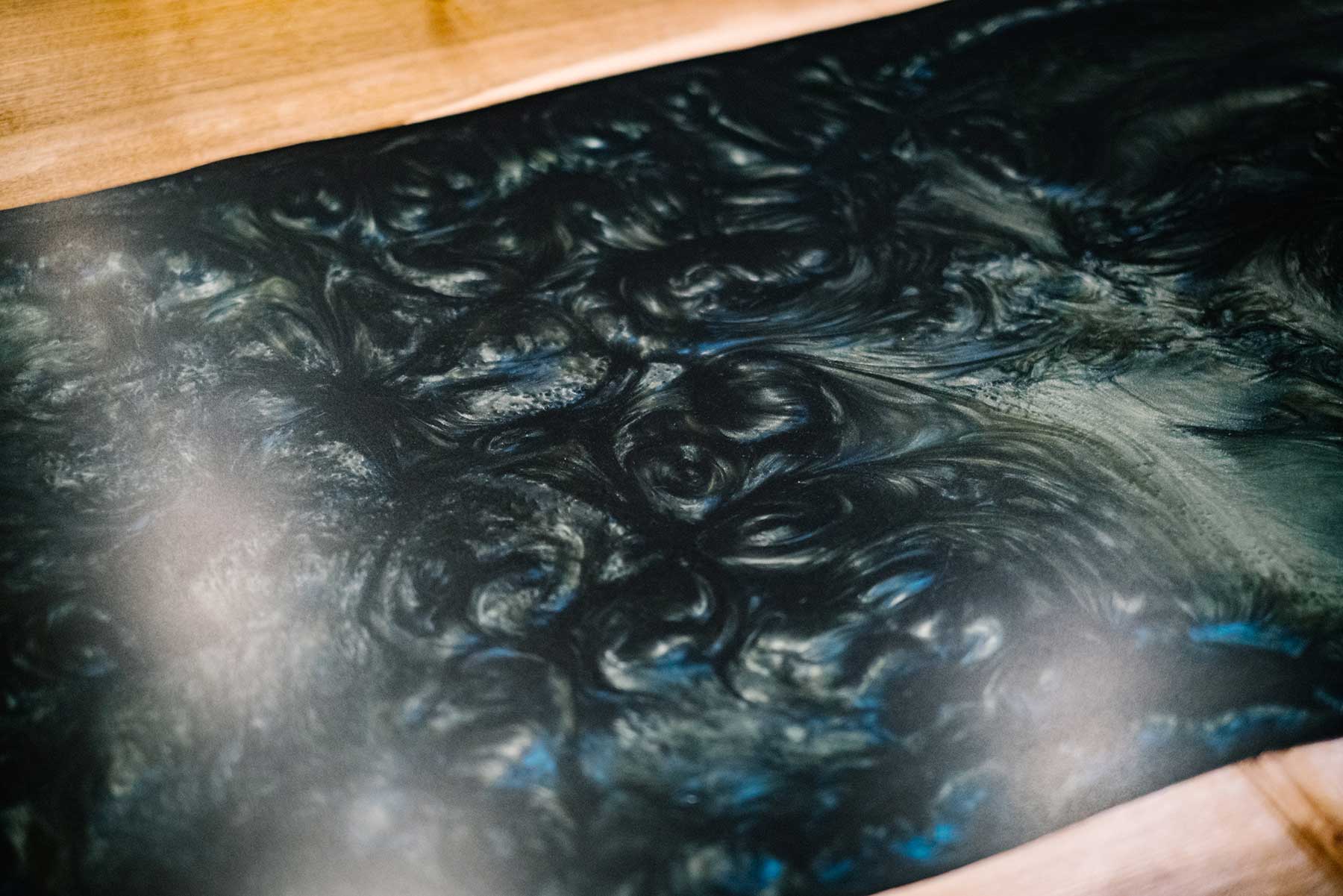
Combining resin and wild walnut, this table really enhances the beauty of nature by adding an artistic modern twist and delivering striking craftsmanship perfection.
Walnut is a very stable wood and resistant to damage. The fragrant blend of finishing oils helps to add depth and intensifies the diverse colour palette of the English walnut, highlighting the natural patterns and striations within the wood.
We sought to create a juxtaposition between the naturally raw material of the walnut and the glasslike smoothness and flow within the resin to create a truly stunning one-off table.
Unique in every detail, bespoke in every respect
The base of the kitchen island was made from walnut and so this informed the choice of wood for the table. Charlotte specified that the wood must come from a tree that had fallen naturally or been felled due to it becoming unstable.
The property sits within the UNESCO heritage of the English Lake District, which abounds with lakes, rivers, forests and mountains and Charlotte was keen to evoke the sense of movement we feel in this naturally wild location. Representing the colours of nature, we chose green mixed with a number of different pigments in order to achieve the exact shade.
In terms of colour psychology, green is associated with nature, renewal and energy – bringing to mind bucolic landscapes, lush fields, rich forests, pleasant scenery and a sense of escapism. The colour green is known for its calming qualities; being at the centre of the colour spectrum, it has a sense of balance, harmony and tranquillity.
Just think how restorative a walk through the forest can be, or how refreshed you can feel after a day outdoors in the garden or at the park. Studies have shown that hospital patients recover quicker with a green view over a view of a brick wall or building. Green is a colour with deep connections to our wellbeing.
Especially today, when our world can feel a little chaotic – whether it’s politics, our increasingly urbanised spaces, or being overwhelmed by technology – green takes us back to basics, back to nature. It symbolises fresh beginnings, good health and growth.
Sustainability and salvage sourcing
We use local, sustainably-sourced and salvaged live edge wood slabs and give them a new life by casting them with an eco-friendly and sustainable epoxy resin to create a solid and unbreakable bond.
As well as a making each table completely unique, it’s our goal for them to be loved and enjoyed by our client, and their family and guests. Each table is finished with durable hard wax oil, which is child and pet safe as well as packed full of natural oils that bring out the exceptional beauty in the wood grain. It also makes the resin pop!
We use full-stave, wide-stave slabs, which are exclusively sourced from sustainable forests and woodlands throughout the UK. Two live edge slabs of wood are set apart and then centrally infilled with epoxy resin to create the iconic river effect.
We hand pick each plank, selecting them on the basis of their unique characteristics such as the cracks, knots and striations, which we then infuse with the resin creating the beautiful smooth glassy effect.
Charlotte says:
“This nature-inspired piece captures the movement rhythms of nature. It’s exactly as I had hoped, evoking the gushing of water after the frequent deluges of rain, the forests, fields, rivers and grasslands. It’s rustic yet modern, contemporary yet classic.”
Our artisan says:
“After receiving Charlotte’s brief, the search began for the right slab of walnut. With each slice of a tree being different from the next, the choice is endless. But walnut isn’t especially common and availability can be random throughout the year. Fortunately, I was able to find a piece that the client loved.
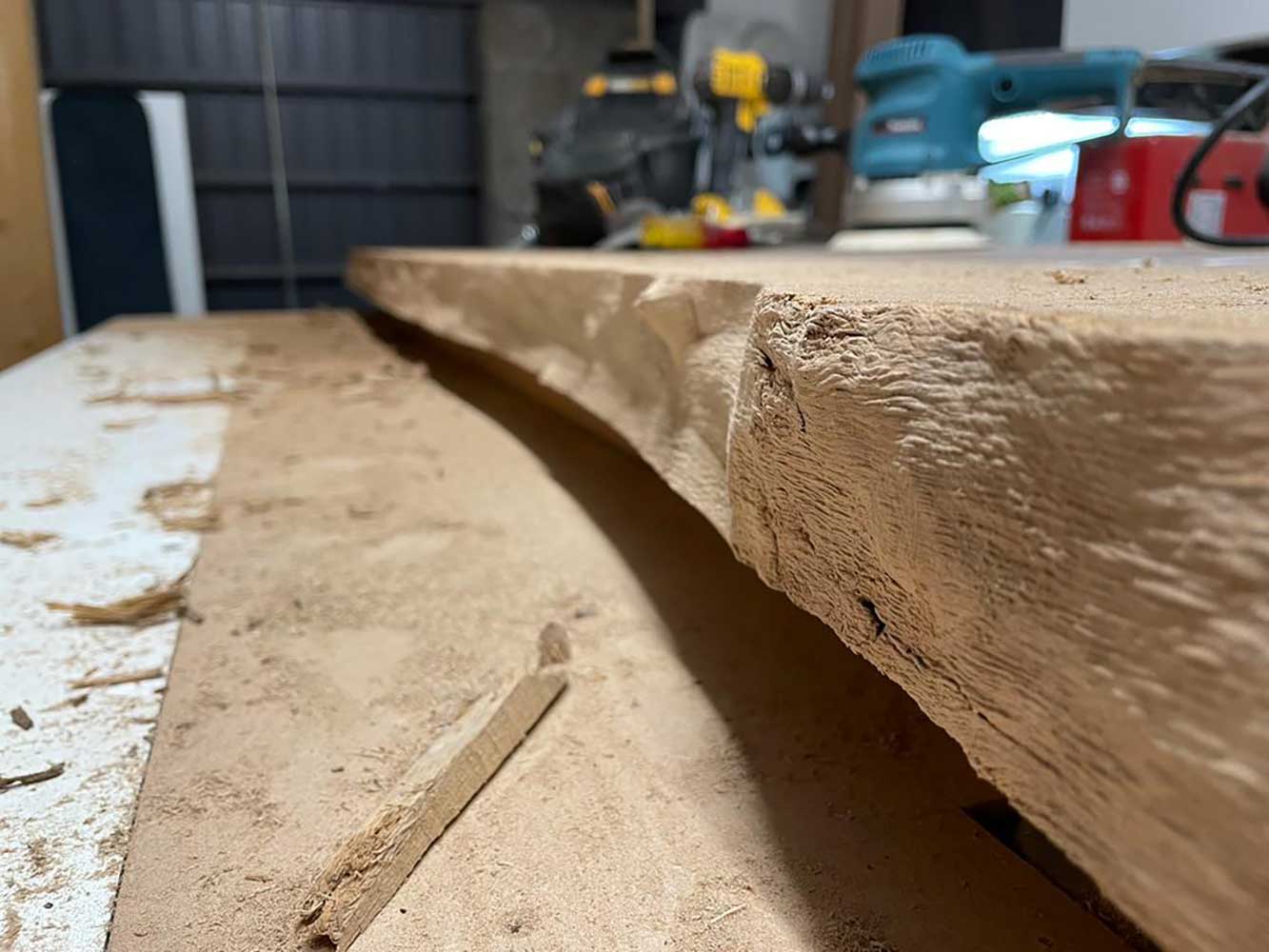
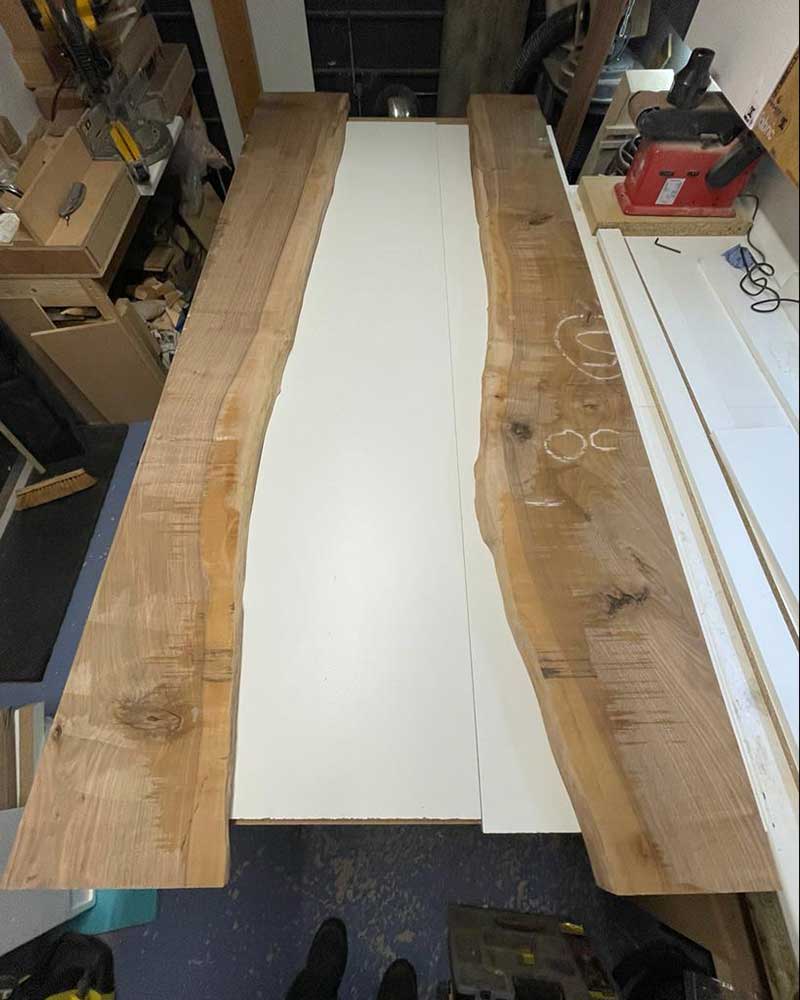
I prepared a mould to hold the wood and resin together. Then the walnut arrived at the workshop and was carefully checked over and assessed for the best place to cut. The natural river shape is dictated by the shape of the tree’s outside face, called the live edge. It’s one of the aspects that gives each table a totally unique appearance.
These edges often retain bark and other loose materials. These must be removed in order to correctly bond the resin to the wood. This is achieved using chisels and wire brushes to get a smooth, clean and naturally-shaped surface. The surface of the walnut also gets checked for any other voids that may have loose material and need to be cleaned out, mostly using dentistry tools.
After the mould is built, the timber is cut and laid so that accurate calculations can be made for the amount of resin to pour. This also lets me know how much pigment I’m adding to achieve consistent colour saturation, depth and density. Using four colours in this piece was tricky, so everything was triple-checked.
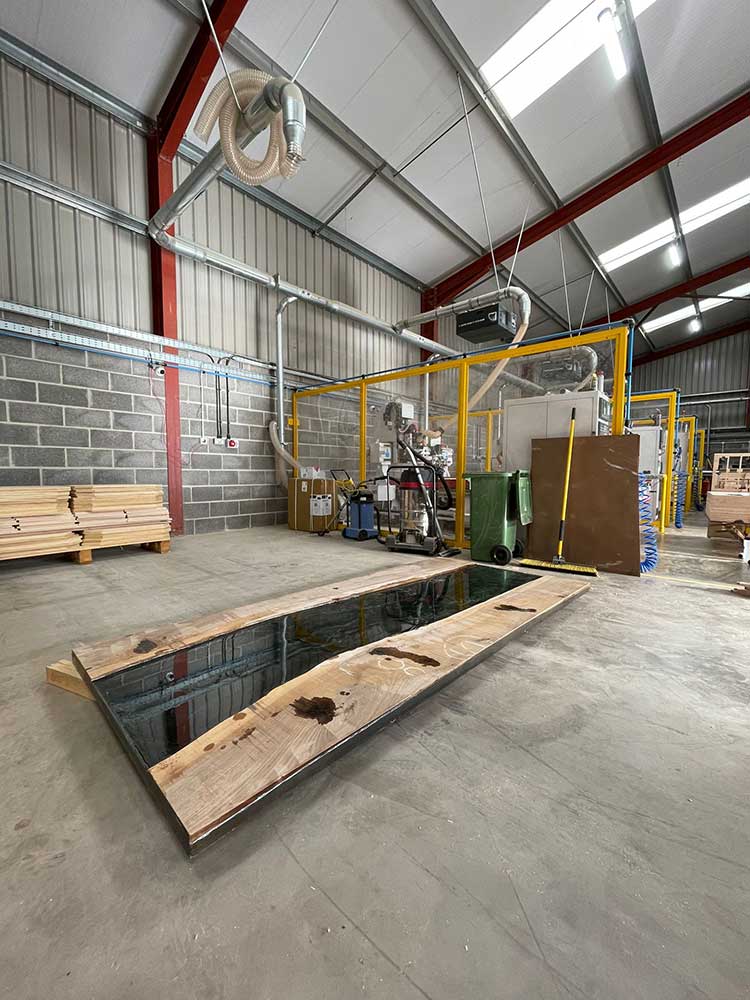
Once the resin is mixed and the colours added, the pouring can happen. This is the first time you get to see the shape and colour of the river. It’s also a moment of apprehension, as resin is a relatively high value product and, if mixed incorrectly, will never fully cure.
The curing process takes approximately 5-7 days, during which time the resin heats up a little. The pattern it makes will shift and change by the hour as the liquid is constantly moving.
Once in a gel state, the resin can be manipulated into swirling shapes, but this can happen anytime, depending on so many factors. And it often doesn’t last long, so if it occurs at 3am then that’s when you get into the workshop and make those swirls!
Once fully cured, the slab, which now weighs about 140 kilos or 22 stone, is milled flat. This prepares the table for further cutting and sanding. It also can reveal hidden voids or character in the material that weren’t visible before, which will need to be worked on as well.
Once milled and checked over, any repairs of micro bubbles or timber defects are dealt with. The first rough sanding and cutting to size follows and the edges are chamfered to soften the appearance of the surface.
The legs for this particular table were made from walnut to match the top and constructed in an x shape. Thick planks of walnut were glued and clamped together for the legs – this laminating process helps to add strength. Then a “rod” is drawn: this is a 1/1 scale drawing of the table to establish proportions and angles for the legs.
Using the rod, the legs are marked up and jointed together, glued and clamped again.
They’re later sanded up, and then work on the connections for the legs and the table can begin.
Steel plates were cut to size, drilled, sanded and lightly oiled ahead of recessing into the underside of the table. These allow a very strong attachment for the legs and the table, despite it being a very large piece of furniture. The fixings can all be removed with one tool so the table can be easily dismantled and moved to another room or property.
Once the connections have been assembled, they are set aside and the final sanding stage begins. This last hours and hours, but is very rewarding and begins to reveal the look of the finished product. Using water to clean and raise the grain reveals a greater depth of character, which is a necessary and important stage of finishing any piece of furniture.
Once the table has been sanded with six different grades of abrasives, it is cleaned again and oil is applied. Both sides are oiled and the top is buffed meticulously, under harsh lighting for the best results.
The piece is now ready for delivery!
I couldn’t have been happier with the result. The table sits very well in the open plan kitchen and the final coat of oil is ensuring a fantastic, durable finish.
I’d like to thank Charlotte for this brief, it’s been an excellent experience and I cannot fault her trust in my skills and direction with colour selection and decision-making.”
Commission a river resin table
Contact Charlotte to commission a river resin table that will become a meaningful piece in your home, one around which stories are told and memories created.
Our river resin dining tables are bespoke in every sense of the word. They can be made to any size, using your personal choice of: wood species, resin colour, leg design, leg material, and any other specific details.
It’s our goal for you to connect with your table on a personal level, experiencing the rhythms and flows of nature.